Nimi Jataka
Nimi Jataka
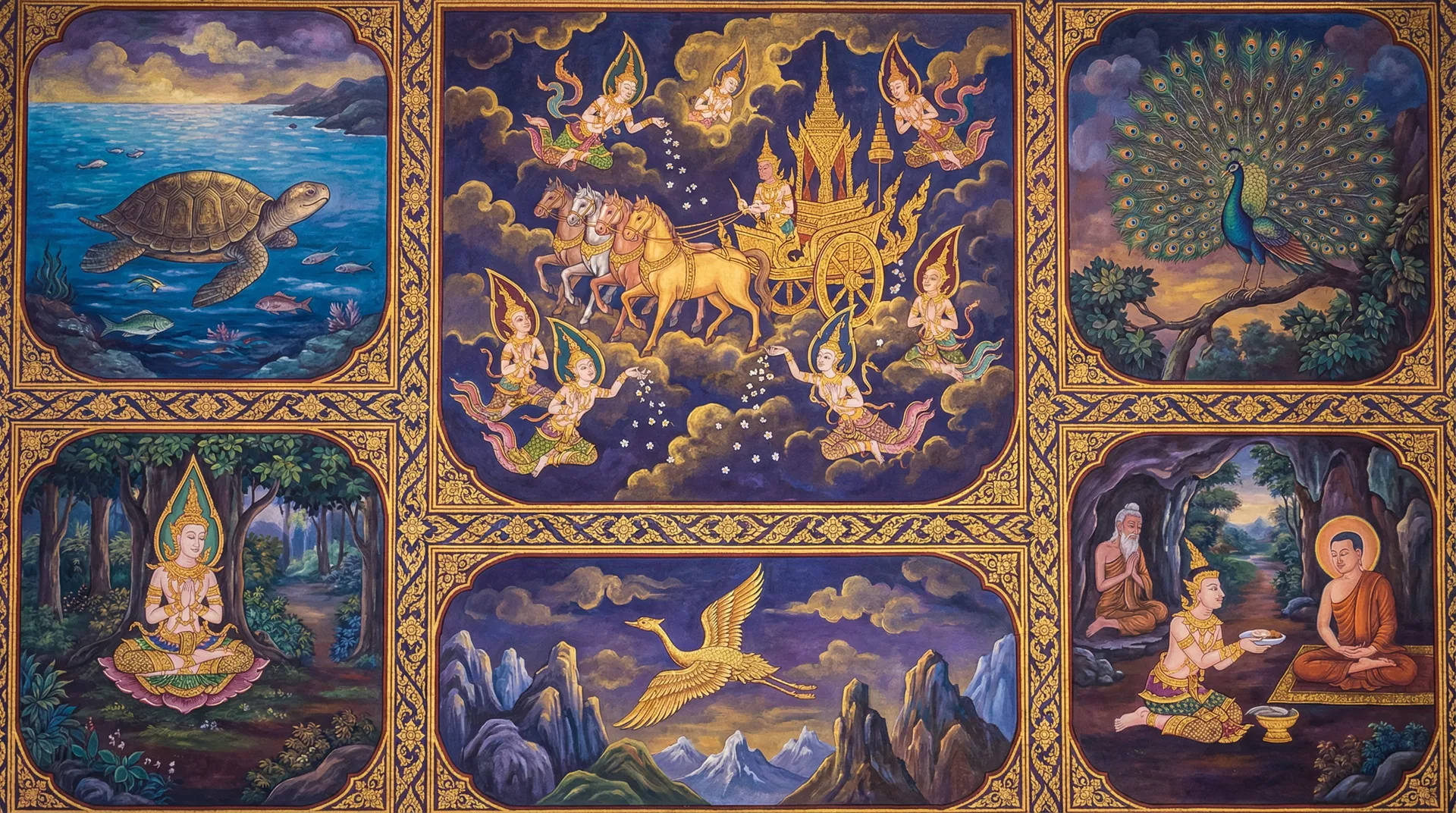
Long ago, in the ancient city of Mithila, ruled a just and virtuous king named Nimi. His reign was a golden age, marked by fairness, prosperity, and the unwavering devotion of his people. King Nimi, however, was not content with earthly pleasures alone. He yearned for a deeper understanding of righteousness and the true nature of happiness. One day, the divine sage Narada visited the king's court, his presence radiating an aura of serenity and wisdom. King Nimi, ever eager to learn, prostrated himself before the sage and asked, "Venerable Narada, you who have traveled the heavens and the earth, what is the greatest joy one can experience? Is it wealth, power, or the love of one's subjects?"
Narada smiled, his eyes twinkling with ancient knowledge. "Great King," he began, "the joys you speak of are fleeting, like morning mist that vanishes with the rising sun. True and lasting joy comes from practicing righteousness, from cultivating virtue in every action. The highest form of righteousness is to uphold the Dharma, the cosmic law of truth and duty, and to serve all beings with compassion."
Intrigued, King Nimi pressed further. "But how can I, a mortal king, achieve such a profound state of being?"
Nar"ada replied, "The gods themselves sometimes seek the counsel of virtuous mortals. I shall ask the great Indra, king of the gods, to grant you a boon. You may visit his heavenly realm and witness the rewards of a righteous life. There, you will see how the gods live and learn the principles that govern their celestial existence."
With this promise, Narada departed. True to his word, he conveyed the king's request to Indra. Indra, impressed by King Nimi's dedication to Dharma, agreed. He sent a celestial chariot to Mithila, its golden aura illuminating the night sky. The chariot descended gracefully, and King Nimi, bidding farewell to his worried queen and his kingdom, ascended to the heavens.
The journey was breathtaking. As the chariot soared through the clouds, King Nimi witnessed wonders beyond his wildest imagination. He saw celestial palaces adorned with jewels, gardens filled with flowers of impossible beauty, and beings of radiant light engaged in joyous activities. Upon arriving in Indra's celestial abode, he was greeted with immense honor. Indra, seated on his throne, welcomed the king warmly. "Welcome, King Nimi," Indra boomed, his voice like the gentle rumble of distant thunder. "You have come to witness the fruits of righteousness. Observe closely, for what you see here is the reflection of deeds performed with pure intention and selfless action."
For many days, King Nimi was a privileged guest in the heavens. He observed the gods engaging in acts of kindness, resolving disputes with wisdom, and dedicating themselves to the welfare of the celestial realms. He saw how their heavenly existence was a direct consequence of their virtuous lives. He learned about the ten kingly virtues: generosity, morality, renunciation, wisdom, effort, patience, truthfulness, determination, loving-kindness, and equanimity. He saw how these virtues were not mere abstract concepts but living principles that guided every aspect of their divine lives.
One day, while exploring the heavenly gardens, King Nimi encountered a group of celestial beings engaged in a lively debate. They were discussing the merits of different paths to enlightenment. Among them was a wise old god who spoke with profound clarity. King Nimi, unable to contain his curiosity, approached him. "Sir," he said respectfully, "you speak with such wisdom. What is the most important teaching you have learned?"
The god smiled. "Young king, the most profound truth is that all suffering arises from attachment. The more we cling to desires, possessions, and even to our sense of self, the more we invite pain. True freedom lies in detachment, in understanding that all things are impermanent and interconnected."
King Nimi pondered these words deeply. He realized that even in the heavens, there was a subtle form of attachment, a clinging to their divine status and pleasures. He understood that the ultimate liberation lay beyond even these celestial realms.
After his sojourn in the heavens, the celestial chariot returned King Nimi to Mithila. He descended, his heart filled with a newfound understanding. His queen, overjoyed to see him, embraced him tightly. "My king, you have returned!" she exclaimed. "Tell me, what wonders have you seen?"
King Nimi, with a serene smile, recounted his celestial journey. He spoke of the gods, their realms, and the principles of righteousness they upheld. But more importantly, he shared the profound lesson of detachment. "My beloved," he said, "the heavens are beautiful, but even there, the path to true peace lies in letting go. We must live virtuously, but without clinging to the results, without becoming attached to even our good deeds."
From that day forward, King Nimi ruled Mithila with even greater wisdom and compassion. He practiced the ten kingly virtues diligently, but with a spirit of detachment. He gave generously, but without expecting praise. He administered justice fairly, but without pride. He dedicated himself to the welfare of his people, but without seeking personal gain. His reign became even more renowned for its peace, prosperity, and spiritual depth. The people of Mithila flourished, living in harmony and contentment, inspired by their king's example of selfless service and profound wisdom.
— In-Article Ad —
💡Moral of the Story
True joy and lasting happiness come from living a life of righteousness and virtue, free from attachment and clinging to desires and outcomes.
Perfection: Wisdom (Prajna) and Generosity (Dana)
— Ad Space (728x90) —
More Jataka Tales You May Enjoy
 133Ekanipāta
Makhadeva Jataka
The Tale of the Wise King and the Golden Goose In the ancient city of Mithila, ruled a benevolent ki...
💡 True wealth lies not in accumulating possessions, but in wisdom, contentment, and the understanding of impermanence. Greed destroys the source of sustained benefit.
 290Tikanipāta
The Bodhisatta as a Physician (Sutasoma Jātaka)
The Bodhisatta as a Physician (Sutasoma Jātaka) In the bustling city of Sāvatthī, a place renowned f...
💡 True compassion is shown through selfless action and unwavering dedication to alleviate suffering, even in the face of overwhelming adversity. The effort and intention are as important as the outcome.
 445Dasakanipāta
Temiyavada Jataka
Temiyavada JatakaIn the kingdom of Supparaka, there was a prince named Temiya. From the moment of hi...
💡 True freedom and peace are found not in worldly possessions or status, but in detachment from suffering and the dedicated pursuit of spiritual liberation.
 342Catukkanipāta
Sākhā Jātaka
Sākhā Jātaka In the verdant foothills of the Himalayas, where ancient trees whispered secrets to the...
💡 In times of danger, wise counsel and trust are essential for survival; succumbing to panic and ignoring guidance often leads to disaster.
 539Mahānipāta
Sutasoma Jataka
The Tale of Prince Sutasoma and the Fearless Ascetic In the vibrant city of Gandhara, ruled King Pil...
💡 True courage lies in acting with righteousness and compassion, even in the face of great danger. Selfless sacrifice and unwavering conviction can inspire profound transformation and end suffering.
288TikanipātaThe Tortoise Who Saved His Companions (Nāga Jātaka)
The Tortoise Who Saved His Companions (Nāga Jātaka) In a time when the earth was a tapestry of vibra...
💡 True strength lies not in physical prowess, but in the wisdom and selfless courage to protect and guide others through adversity.
— Multiplex Ad —